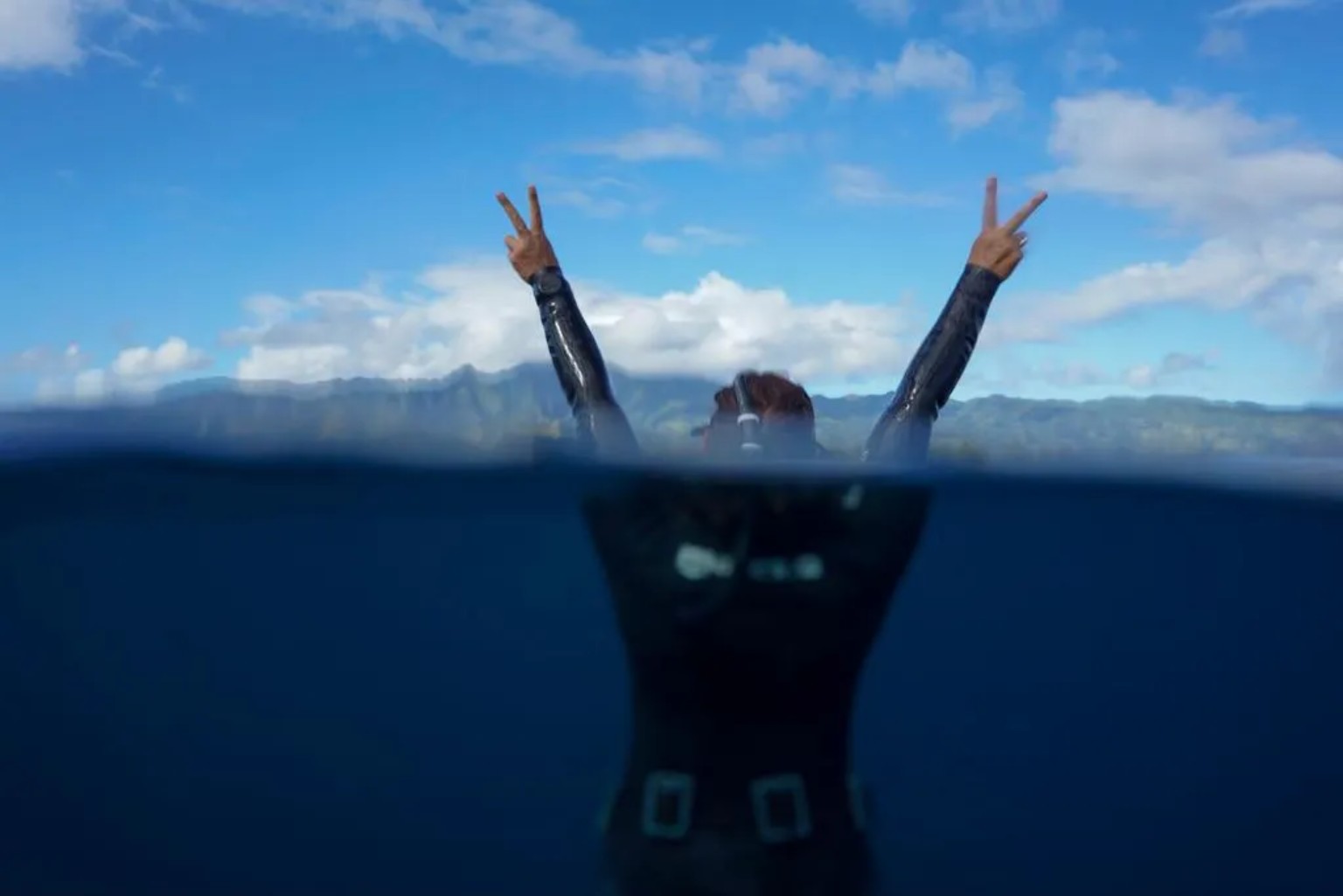
A first look at how freediving can support nervous system regulation, adaptive responses, and emotional relief — even when words fall short.
Freediving is often seen as a sport of extremes: deep dives, long breath holds, and feats of mental focus. But beneath the surface, something quieter is happening — something profoundly regulating. In this series, we’ll explore how freediving isn’t just about depth or performance but about nervous system adaptation, emotional recalibration, and the subtle ways our bodies seek safety.
This is not about trauma in the clinical sense — this is about the patterns our nervous systems hold from past overwhelm. These patterns — adaptive, protective, and deeply encoded — often live below conscious awareness. And breath-hold diving, when approached with care, has the power to gently shift those patterns.
What Is Trauma-Informed Freediving?
Trauma-informed freediving is a framework that explores how freediving can support the nervous system in returning to safety, flexibility, and connection. It integrates basic dive physiology — like breath control and the mammalian dive response (MDR) — with the understanding that emotional and physiological regulation are inseparable.
At its core, trauma-informed freediving is built on three pillars:
- Creating internal safety through awareness of your physiological state.
- Fostering relational safety through co-regulation with your instructor or buddy.
- Using silence and breath as non-verbal pathways for nervous system recalibration.
Why This Matters
Most of us carry residual waves of nervous system adaptation — held tension, reactivity, or emotional shut-down shaped by earlier disruptions to safety or connection. Sometimes it shows up as perfectionism. Or a fear of stillness. Or difficulty relaxing, even in calm settings.
Not all of this fits into the typical definition of “trauma.” But it lives in the body nonetheless.
That’s where freediving becomes more than a sport — it becomes a tool for relearning safety from the inside out.
Adaptive Patterns, Not “Symptoms”
Instead of pathologizing, this framework looks at how the nervous system learned to respond under stress. Some people fight. Others freeze. Some fawn, appease, or become overly accommodating. Many high-functioning people look calm on the outside while feeling completely disconnected inside.
These aren’t flaws. They’re survival responses.
Freediving as a Regulating Practice
When practiced with intention and care, freediving offers a real-time, body-based way to access:
- Internal feedback loops (e.g., heart rate, breath hunger, tension release)
- Co-regulation with others in a shared safety system
- A structured environment for tracking stress and restoration
Freediving is one of the only practices that brings together controlled breath-holding, nervous system shifts, and emotional grounding — without requiring words.
From Trauma Recovery to Expanding Adaptability
Rather than focus on what’s “wrong,” we ask:
How did your nervous system learn to keep you safe?
And how can we offer it new, adaptive experiences?
This lens is about expanding adaptability, not “fixing trauma.” It’s about teaching the body:
- That rest is safe
- That stillness doesn’t mean danger
- That effort can be gentle
- And that breath is a resource, not a threat
What’s Ahead in This Series
Over the next few weeks, I’ll share insights from my two-year observational study on how freediving impacts the nervous system. We’ll look at:
- The Mammalian Dive Response (MDR) — and why it matters for emotional regulation
- Self-reported experiences from over 100 freedivers around the world
- What happens when things go wrong — dissociation, reactivity, and performance pressure
- How freediving teaches us emotional adaptability — and offers a powerful, stigma-free path to reconnection
Follow Along
This is Part 1 of a 4-part series exploring the connection between freediving, breath, and the nervous system.
Follow me here or on Instagram @theunderwatertherapist for the next post:
Part 2: Adaptive Survival Patterns & the Body’s Hidden Language
⚠️ Freediving Safety Reminder:
While this article explores the profound mental health and nervous system benefits of freediving, freediving should never be practiced alone or without proper training. Always dive with a trained buddy, follow established safety protocols, and seek guidance from certified instructors.
The practices discussed here are based on structured, informed diving — not hyperventilation or breath-holding on land without supervision.
🧠 If you are exploring freediving for nervous system regulation or trauma recovery, I strongly encourage a trauma-informed approach and community connection.
Breathe safe, dive deep, stay connected. 🌊
— Elaine Hicks, @theunderwatertherapist